

 Facebook
 X
X
 Pinterest
 Copy Link
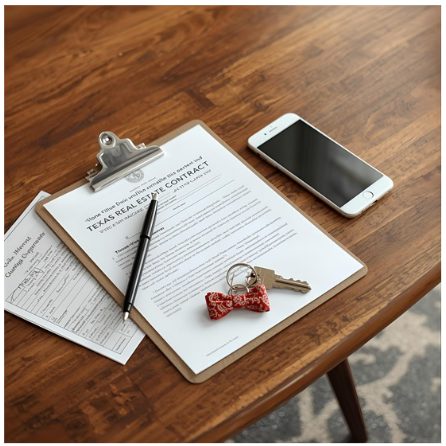
How to Make an Offer on a House in Texas
What Really Matters Before You Sign — Home Buying Step 9
This article is part of my practical, experience-based Home Buying Series. Step 9 assumes you’ve already narrowed the field and are focusing on homes you could realistically move forward on.
- Step 1: Know Your Credit
- Step 2: Build a Sustainable Budget
- Step 3: Choose a Lender Who Explains, Not Sells
- Step 4: Fixing Underwriting Issues (“Not Yet” Is Not “No”)
- Step 5: How to Choose a Realtor Who Works for You
- Step 6: Mortgage Types Explained for Buyers
- Step 7: Start Looking at Houses the Right Way
- Step 8: Narrowing the Field
At this point, you’re no longer just browsing. You’re preparing to make an offer on a house in Texas. That’s where timelines, inspections, negotiation strategy, and contract structure begin to matter—often more than price alone.
In Texas, When You Make an Offer on a House, It Becomes the Contract Once Both Parties Sign
Once both buyer and seller sign the offer, it is the contract. There is no separate “offer phase” and “contract phase.” That means what you ask for, what you waive, and what timelines you agree to all matter immediately.
If you ask for a lot up front, expect pushback. Negotiation is normal—but everything you request has consequences.
The Texas 1 to 4 Contract and Amendments
Most residential transactions in Texas use the TREC 1 to 4 Family Residential Contract and standardized amendments. These forms are designed by TREC and Texas REALTORS® to handle the vast majority of situations buyers and sellers encounter.
Not every situation is simple—but it does mean most issues can be addressed without custom drafting.
Important: REALTORS® are not attorneys. If you want custom language drafted into a contract, you must consult a Texas real estate attorney. We cannot give legal advice.
Most real-world issues—repairs, timelines, credits, inclusions, exclusions—are handled through the standard forms and amendments when used correctly.
What Transfers With the Home (And What People Get Wrong)
One of the most commonly misunderstood sections of the contract is what stays with the house.
Under the 1 to 4 contract, fixtures and permanently attached improvements convey unless specifically excluded.
A good rule of thumb is: if it’s bolted down, it stays. But everything is negotiable.
Common problem areas include:
- appliances
- mounted televisions and brackets
- custom lighting or chandeliers
- garage equipment
- water softeners
- outdoor cooking equipment
I’ve seen sellers remove fixtures they believed were “theirs” because they installed them. I’ve also seen buyers shocked when something they assumed would stay was removed.
When my in-laws sold their last home, the buyer wanted the patio furniture. It was negotiated and included. In another transaction I handled, appliances were listed by serial number—an excellent practice when high-end items are involved.
Do Not Ask for Repairs Before Inspections
This is a critical sequencing issue.
If you ask for minor repairs in the offer, the seller may agree—and later resist addressing the larger, more expensive problems uncovered during inspections.
You do not yet know what matters most.
Inspections exist to identify real risk. That’s why repair negotiations typically happen after inspections—not before.
Inspections Are a Gamble—But a Smart One
The money you spend on inspections is a calculated risk that you’ll either:
- save money later, or
- learn when to walk away
Beyond a general home inspection, specialized inspections are often worth the cost:
- Plumbing cameras
- Electrical inspections
- HVAC evaluations
- Well or septic inspections for rural properties
Some electricians and HVAC companies will do inspections for little or no cost. Plumbers generally won’t run cameras for free—but paying a little now can prevent major surprises later.
I’ve also worked with agents who recommend having a structural engineer evaluate foundations rather than a repair company. An engineer sells analysis—not repairs.
West Texas Reality: Red Clay and Foundation Movement
In much of West Texas and the Big Country, homes sit on red clay. That matters.
Minor foundation movement is common. Cracked walls, popped corners, or ceiling stress lines are often expected to some degree.
Almost every home here will show some foundation-related issue—major or minor.
This is where inspections matter.
Slab homes deserve special attention because plumbing and sewer lines often run through the slab. Foundation movement can create related plumbing issues.
Older pier-and-beam homes avoid some slab risks, but foundation warranties on those systems are often shorter or limited.
The goal isn’t finding a home with no issues—it’s understanding which issues are manageable and which are not.
Rural Properties and Mission-Critical Systems
If a property depends on a single system—such as a private well with no nearby municipal water—that system deserves extra scrutiny.
I’ve seen situations where wells appeared functional at purchase, only to fail shortly after closing.
If something is irreplaceable or has no backup, it may require a more extensive inspection than usual. That’s not paranoia—it’s prudence.
Home Warranties: Insurance for the First Year
Home warranties are common asks in Texas—and for good reason.
Even well-maintained homes can surprise you.
I handled a transaction where a home had been flipped well, but a 20-year-old AC failed shortly after closing. The home warranty provided by the seller covered replacement.
Most home warranty companies repair first and replace last. The first year acts as insurance against the unexpected. In tough markets where sellers won’t pay for the home warranty, buying the warranty yourself is a good hedge against the unknown.
Renewing a warranty later becomes a cost-benefit decision. Know what is—and is not—covered.
Negotiation Is Not Zero-Sum
Residential real estate negotiations are not about “winning.” They’re about reaching a solution both parties can live with.
Once your offer is accepted, you still need cooperation through inspections, repairs, appraisal, and closing.
Zero-sum tactics often create resistance and delays.
Sellers love their homes. They have memories attached to them. You don’t tell them your plans to tear it apart and rebuild it in your image.
Inspections—not confrontation—are how real problems are identified.
Why Step 9 Matters
Step 9 is where the process becomes formal, time-sensitive, and legally binding.
By the time you make an offer on a house in Texas, you should understand:
- what you’re committing to
- what can be negotiated later
- what timelines must be met
- and when to walk away
In the next step, we’ll walk through contract timelines, option periods, escrow, amendments, and what happens between acceptance and closing.


About Me — Doug Berry, MBA, REALTOR®
The Bow Tie Agent
I’m a REALTOR® with Better Homes & Gardens Senter, REALTORS® who focuses on helping buyers understand the real-world side of homeownership — from lending and budgeting to navigating underwriting without surprises. With an MBA and experience as a lender with USDA Rural Development’s mortgage programs, I approach the process the same way I do with clients: clearly, calmly, and without sales pressure.
If you have questions about this step, need help preparing for a home purchase, or want a second set of eyes before making an offer, feel free to reach out:


